
Welcome!
My name is Brandon, and this is a blog created during my cellular biology class at
Old Dominion University
Latest from the Blog
- My introduction (Why did I create this site?)
Hello, my name is Brandon and I am a first-year transfer student at Old Dominion University. I am pursuing a Bachelor’s Degree in Biomedical Sciences. There are two primary reasons why I created this site:
- As I take this journey towards my degree, I would like to record ‘milestones’ from knowledge that I have obtained along the way. More specifically, I would like to record pertinent information and items that I find personally interesting.
- I would like to create a public forum that I can share my ‘milestones’ with friends, colleauges, business associates, and future employers.
I hope that my knowledge gained, can be your knowledge gained.
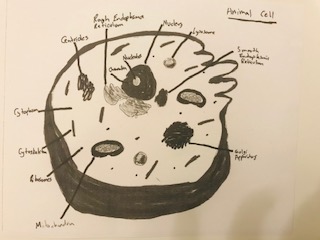
Draw a Cell
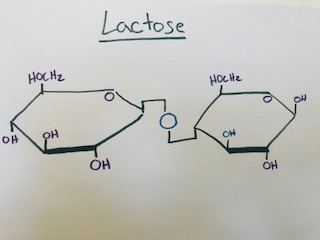
Draw a molecule
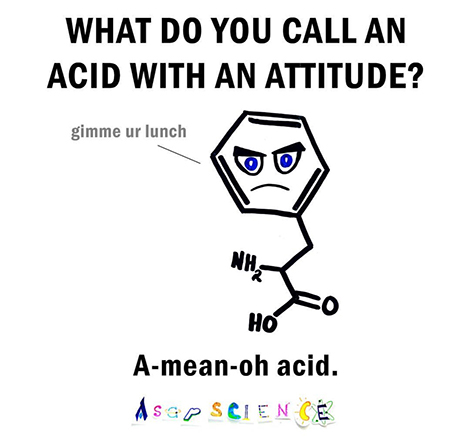
Select a Meme
Circadian Rhythm – DNA Replication
The circadian clock ensu
Brandon Bogan
13 June 2021
Synechococcus elongatus is a type of bacteria that has recently shed some light on how circadian rhythms affect gene replication. Synechococcus elongatus is specifically a type of unicellular cyanobacteria. It is oligotrophic, thus found in freshwater environments of low nutrients, such as hot springs or freshwater habitats with a moderate temperature. Synechococcus elongatus is a photoautotroph bacterium, which means that it utilizes light, carbon dioxide, and water as a source of energy. (Wikipedia contributors (2011)). Synechococcus elongatus is particularly fascinating for its use of the circadian rhythm for gene replication. The circadian rhythm is a 24-hour cycle that most living organisms (plants, animals, and bacterium) follow. Just as in humans, the Synechococcus elongatus bacterium has different stages in its ‘day’. As a phototrophic organism, it must anticipate when it will be in periods of light and when it will be in the presence of darkness. Recent studies are testing the effects on the bacterium when these periods of its circadian rhythm are disrupted. By learning how their gene replication is effected by disruption in their circadian rhythm, we might find parallels in how such disruptions can affect humans.
Two important role players in the replication process are DNA beta clamps and single stranded DNA binding proteins (SSB proteins). Beta clamps are a key contributor to increasing the rate of DNA replication. One of the major inhibitors of DNA replication is the presence of DNA polymerase. Specifically, DNA polymerase will interfere by binding to DNA template strands and limiting the rate of replication that can be produced by them. However, beta clamp proteins have a stronger bind to the DNA polymerase, than do the DNA polymerase with the DNA template. Beta clamps will bind to the DNA polymerase, and prevent it from binding to the DNA template, thus negating its inhibitive influence on the process. Beta clamps have been known to have major influence on the rate of replication, with some studies suggestion that they can increase the rate by over one thousand times compared to its absence. (Wikipedia contributors. (2020)). In the DNA replication process, SSB proteins will attract to and combine with single-stranded DNA. This binding offers a couple of benefits. First, it will prevent that single-stranded DNA from becoming broken down during the repair process. It also prevents those strands from combining with other newly separated strands of DNA, allowing those two strands to become the base of two individual DNA strands, as opposed to one. (Marceau, A. (2012)).
Synechococcus elongates specimens were observed in a test, taking place over 48-hours. There were two types of Synechococcus elongates tested in this process: wild type and mutant type. The wild type is essentially an unaltered version of the bacteria, where as the mutant type (specifically an alteration of the kaiBC gene). Thymidine is used in each of the types of bacteria to identify dividing cells, thus indicating different rates of replication. In the wild type, replication was at its maximum level at 0600 (dawn). As 1200 (midday) approached, the replication rate decreased. At 1800 (dusk), replication was at its minimum level. Going from dusk to 0000 (midnight) replication rate once again increased. Conversely, when the mutant bacteria were tested, it showed no such variance in replication rate. The replication rate stayed at the same level (right above the minimum level for the wild type) through the duration of the test. This indicated that the wild type was more affected by the circadian rhythm, and produced a higher replication rate than the mutant strands.
Aside from using different types of Synechococcus elongates, the tests also observed the effect of light, and light intensity, on the replication rate. The initial tests was composed of a 48 hour cycle divided equally by periods of light, darkness, light, then darkness. This indicated that the doubling time (time that it takes for one complete round of replication) of the bacteria was around 36 hours. Next, the bacteria were observed for 48 hours under only light conditions, with no darkness. In addition, the intensity of the light was adjusted throughout the test. During this test, levels of beta clamp and SSB proteins were observed to determine rate of replication. At low levels of light, the doubling time was decreased from 36 hours to 26 hours. Under medium light intensity, it further dropped to 16 hours, and at the highest intensity the doubling rate was at 13 hours. This test draws two conclusions. One, that the doubling rate of the bacteria was shortened with the increase in light and light intensity. Secondly, it concludes that increase in light and light intensity will disrupt the natural circadian rhythm of the bacteria.
The tests produce two kinds of results: in-phase (observed under normal light/dark conditions) and out-of-phase (observed under only light conditions). When comparing these two, there is a stark difference in results. In-phase tests show both DNA replication and cell division, as would be expected. However, out of phase tests show that DNA replication is taking place by the presence of beta clamp proteins, but that the cells do not divide. We thus can conclude that DNA replication and cell division are connected to the circadian rhythm, and are altered when the process is interrupted. When we have too much light, we see that cell division is hindered. Conversely, under all dark conditions gene replication is hindered and does not complete its normal cycle.
Disruptions in the circadian rhythm of organisms has shown to affect DNA replication. The effects include unfinished chromosomes, damaged DNA, and mutations, all of which can lead to various health issues, such as cancer. Synechococcus elongates is one of the more ‘simple’ organisms in which a circadian rhythm takes place. Thus, it offers scientist a unique and convenient opportunity to observe the affects that altering that rhythm can have on DNA replication. By being able to efficiently test Synechococcus elongates, we can gain a better understanding of the effects of disrupted circadian rhythms has on other organisms, to include humans.
References:
Wikipedia contributors. (2011). Synechococcus elongatus,
https://microbewiki.kenyon.edu/index.php/Synechococcus_elongatus
Wikipedia contributors. (2020). DNA clamp,
https://en.wikipedia.org/wiki/DNA_clamp
Marceau, A. (2012). Functions of single-strand DNA-binding proteins in DNA replication, recombination, and repair. PubMed.gov,
https://pubmed.ncbi.nlm.nih.gov/22976174/
Liao, Y., Rust, M. The circadian clock ensures successful DNA replication in cyanobacteria
Reflection
Throughout this course I gained a better understanding of science on the molecular level. I was reacquainted with the characteristics of cells and learned about the various cellular functions. Specifically, I grew a better understanding of the metabolic process. I was able to understand things like glycolysis and the kreb’s cycle, and the production of ATP. I was aware of most of these terms before, but had little knowledge of how they worked or their purpose. Specifically, this will help me to understand diet and nutrition. I hope to build on this as I continue to study biomedical sciences.
Get new content delivered directly to your inbox.
 Knowledge Thirst